A coach who started with his own interference.
I started coaching in Northern Ireland in 2010 with a clear idea of the job: make players better at football. During my postgraduate study, one equation changed what I thought that meant. Performance is potential minus interference, and some of the biggest interference I found was in me.
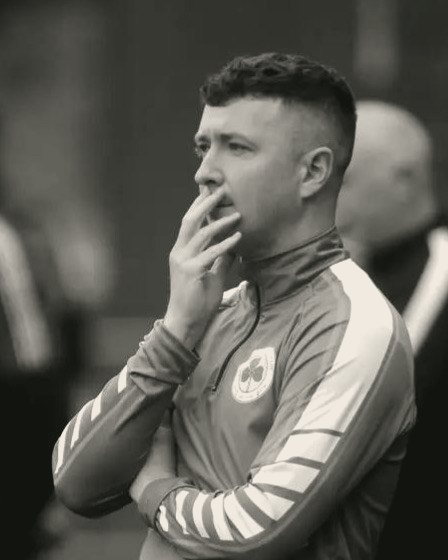
The first test I failed was public. A player of mine was assaulted on the field, the referee gave nothing, and I stormed onto the pitch. I was sent off, and a substitution went wrong in the chaos that followed.
I had lost self-control, and once I lost it I stopped deciding well. So I worked on it like any other part of my coaching. When the same situation came round again, I stayed calm and made the call the game needed. Read the full story.
The standard I hold myself to came earlier, from my grandfather John, a boxing trainer in Belfast. His gym ran on high demand and high support at the same time, and he treated the people in it like family. I didn't notice how much of that I had carried with me until I started coaching.
Stay with me. Breathe and work, work and breathe.My grandfather John, in his boxing gym in Belfast
Since 2010 I've coached in Northern Ireland, Canada, China and the United States, from primary school programs to academy and senior football. On the football side, my thinking starts from one idea: perception and decision come before technique. Every action is communication, decision and execution at once, so I coach what a player sees and chooses as well as what their feet do.
Over those years I built a system for the other half of the job. It covered self-awareness, confidence, self-control and the other emotional skills that decide performance, with equal weight on a player's wellbeing and growth as a person. In 2020 we turned it into technology, and today HeadCoach is a wellbeing and performance platform for athletes, coaches and clubs. I lead it as co-founder and President.
These days most of my week belongs to Chicago City Soccer Club, where I also coach two teams. Staying on the grass keeps the rest of the work honest.
Director of Football
Chicago City Soccer Club
U18 Girls Academy Head Coach, and the U14/15 boys
Chicago City Soccer Club
Co-founder and President
HeadCoach
Three things I hold to.
Each one shows up in how I plan a week, run a session and talk to a coach.
Psychological development is part of performance, so it gets planned into the training week.
Perception and decision come before technique.
Report what the research says, and say where it runs out.
Whose ideas I build on.
Good coaching borrows, and should say where from. These are the six I go back to most, and where you can see each one in my work.
Raymond Verheijen
Football as a chain of actions, and Football Periodisation.
Where it shows. CDE, and sessions that look like football.
W. Timothy Gallwey
Performance is potential minus interference.
Where it shows. The question every session starts from.
Lisa Feldman Barrett
Emotion as something the brain constructs.
Where it shows. Emotional skills coached as skills, with names, routines and practice.
Abraham Maslow and Scott Barry Kaufman
Deficiency needs and growth needs, and Kaufman's update of Maslow in Transcend.
Where it shows. Person first, and coaching to a player's growth as well as their gaps.
James Clear
Habits that start from identity.
Where it shows. Habits worked back from what a player needs.
Vanessa Urch Druskat
Team emotional intelligence, built through norms and routines.
Where it shows. The team culture workshops.
Further reading, including the emotional intelligence models I use
- Jean Piaget, Erik Erikson and James Marcia: how children think and form identity, read with their limits.
- Jim Loehr: purpose, character and starting with the end in mind.
- John Mayer and Peter Salovey: emotional intelligence as four abilities that can be developed.
- Daniel Goleman and Richard Boyatzis: emotional intelligence in leadership and self-management.
- Reuven Bar-On: emotional-social intelligence and wellbeing.
- Martyn Newman and Judy Purse: the RocheMartin model of emotional and social intelligence.
- Edgar Schein and Chris Argyris: the distance between the values a group states and the ones it lives.
Roles since 2010.
Where I've worked, and what I was there to do.
Chicago City Soccer Club
Works across the football side of the club: the playing model, coach education and football technology. Coaches the U18 Girls Academy and the U14/15 boys.
HeadCoach
Began as a coaching system for players' emotional skills and wellbeing, and became technology in 2020. Now a wellbeing and performance platform for athletes, coaches and clubs, live on iOS and Android since February 2024.
Seattle Celtic
Coached the U13, U15 and U17 Elite Academy squads in the same season.
London TFC Academy
Coached in the Ontario Player Development League and led player and coach development across the academy.
Burnley FC International
Led three teams full time and mentored UK and Chinese coaches, until COVID-19 ended the program.
Vancouver Whitecaps FC
Led the full-time program for U17 and U15 boys, U14 girls and the U10 to U13 prospects pathway, alongside coaches, physiotherapists, sports scientists and psychologists. Opened a goalkeeping academy, rebuilt the girls academy and opened a second provincial centre.
Knockbreda FC
Senior football in the NIFL Premiership, and the U20 program.
Irish Football Association · St Mary's FC
Player development, grassroots and primary school programs, and one age group coached from U13 to U19 over six years.
Licences and study.
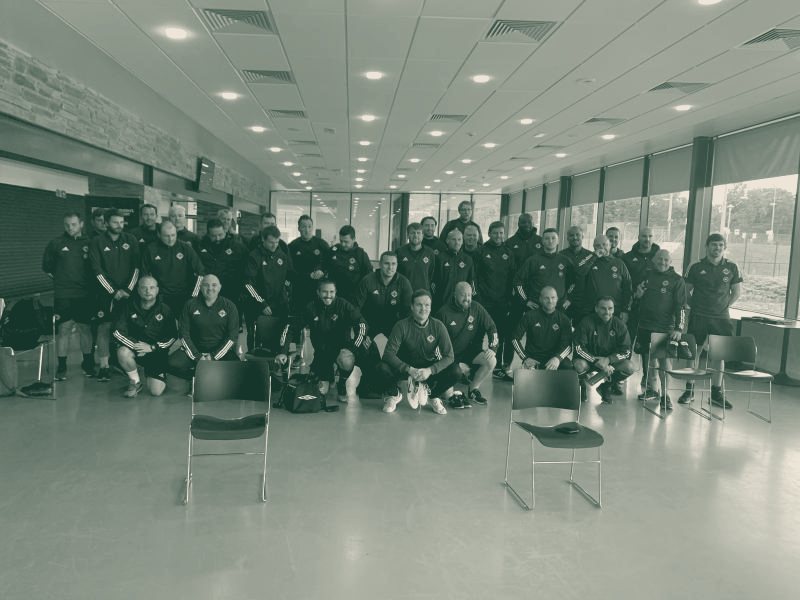
Talks, workshops, or a question about developing players and coaches.
Email is the quickest way to reach me. A few lines on who you are, where you work and what is on your mind is the perfect start.
[email protected]